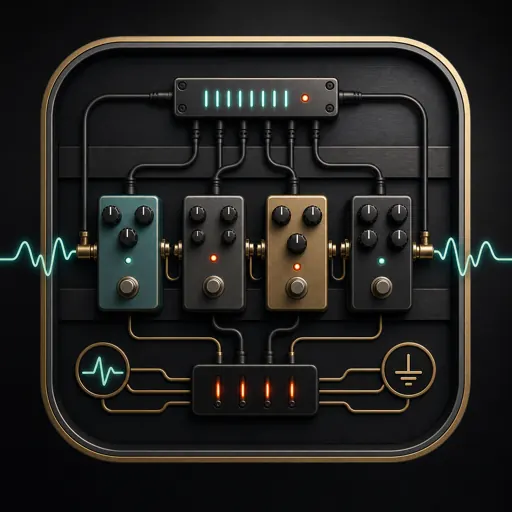
Buying guide · Signal Chain
Pedalboard cable and case checklist
A practical checklist for patch cables, power leads, labels, cases, hook-and-loop, loop switchers, buffers, and spare parts.
As an Amazon Associate, Signal Chain earns from qualifying purchases. Product links may be affiliate links.
The boring pedalboard utilities are what keep the board working after it leaves the bedroom.
Carry The Boring Backup
Spare patch cables, picks, power leads, and tape solve more live problems than another specialty pedal.
Protect The Board
A case keeps switches, knobs, and cable ends from taking abuse in the car.
Label The Weird Stuff
Unusual current draws, polarity adapters, and loop-switcher routing should be obvious before soundcheck.
Cable
Use cables that fit the layout.
Short, flat, or solderless cable choices should follow the board layout, not the other way around.
- Avoid tight strain at jacks.
- Label stereo or insert cables.
- Pack one known-good spare.
Case
Protect switches, knobs, and power jacks.
Soft bags work for local practice; hard cases make more sense when the board travels constantly.
- Check interior height.
- Remove loose accessories.
- Protect expression pedals and tall knobs.
Utility
Add switching only when the board demands it.
Loop switchers and MIDI controllers are excellent when they solve actual song changes.
- Do not overcomplicate a small board.
- Map presets before gigs.
- Keep manual control possible.
How to use the product list
Start with the first product category that solves your real constraint, then move outward. The list below is curated for this guide’s setup path, not ranked by price, rating, discount, or availability.
Common mistakes to avoid
The easy mistake is buying the most exciting item and ignoring the friction around it. A great instrument on a shaky stand, a vocal mic without a stable cable, a bass through a weak amp, or a keyboard without a real sustain pedal can make the whole setup feel less serious than it is.
The better move is to buy the first version that solves the real constraint, then upgrade where the player can hear or feel the limitation. That keeps the rig useful without turning the first purchase into a pile of speculative extras.
Quick answers
Why are prices, ratings, and availability not listed here?
Those details change constantly at the retailer. The guide focuses on fit, tradeoffs, and setup logic, then links to the product page for current retailer information.
Should I buy everything at once?
Usually no. Buy the pieces that remove friction or prevent damage first, then upgrade once the setup shows a specific problem.